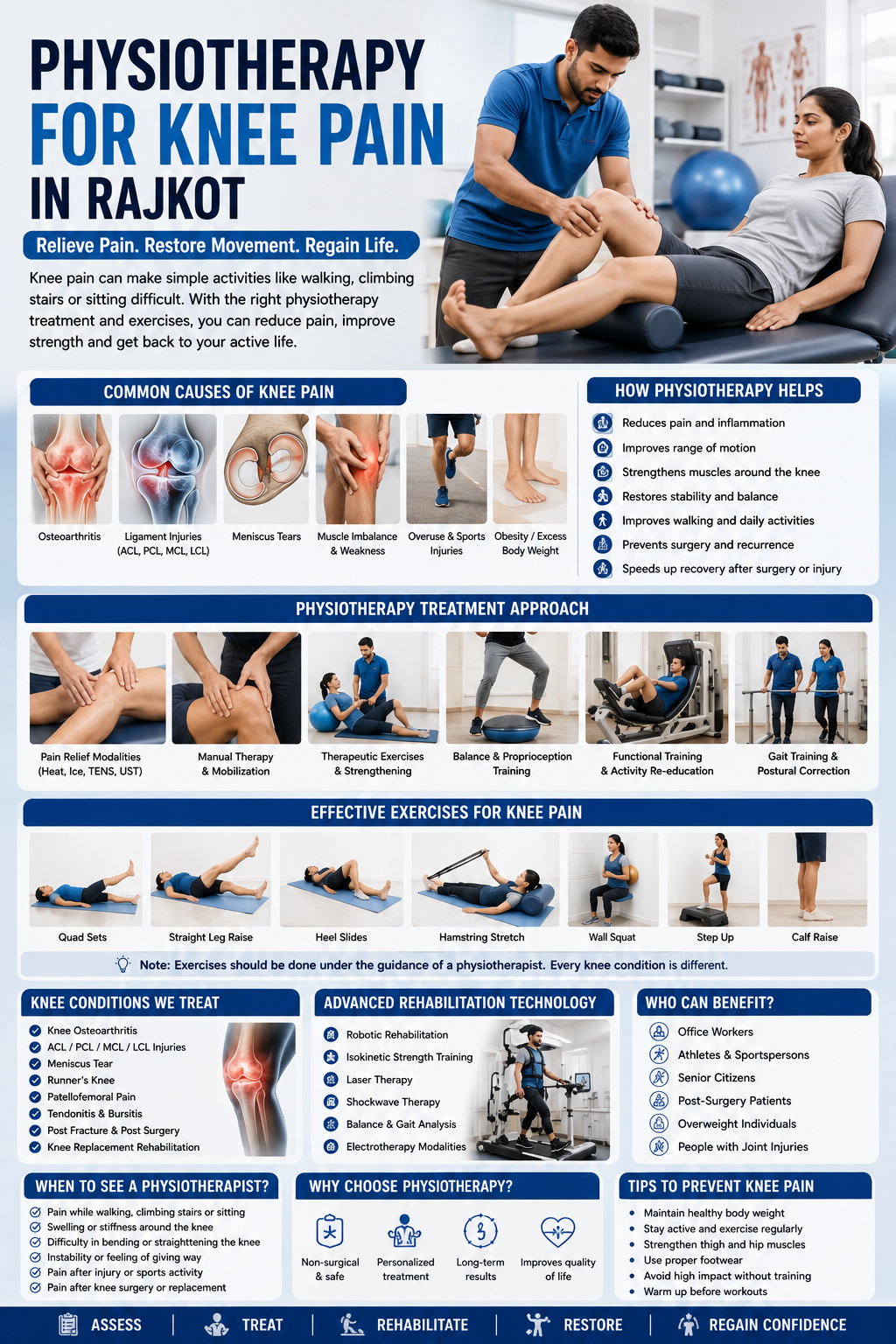
Types of Knee Pain: Common Causes, Symptoms & When to See a Physiotherapist
Knee pain is not one single condition. The location, type, duration and cause of pain can vary significantly from person to person.
Understanding the type of knee pain can help identify when physiotherapy, medical assessment or further investigation may be required.
1. Knee Pain Due to Osteoarthritis
Usually more common with increasing age, osteoarthritis may cause:
Pain while walking or climbing stairs
Morning or activity-related stiffness
Reduced knee movement
Swelling
Difficulty squatting
Physiotherapy can focus on strengthening, mobility, balance, functional training and lifestyle management.
2. Front-of-Knee Pain
Pain around or behind the kneecap is commonly associated with patellofemoral pain.
It may worsen with:
Stairs
Squatting
Running
Jumping
Prolonged sitting
Treatment commonly focuses on activity modification, strengthening and movement control.
3. Knee Pain After Sports Injury
Sports can cause injuries involving:
ACL
PCL
MCL
LCL
Meniscus
Tendons
Symptoms may include pain, swelling, instability or difficulty returning to sports.
A structured sports rehabilitation program can help restore strength, balance and sport-specific function.
4. Inner-Side Knee Pain
Pain on the inside of the knee may be related to structures such as the MCL, meniscus, tendons or joint surfaces.
The exact cause requires clinical assessment rather than assuming the diagnosis from pain location alone.
5. Outer-Side Knee Pain
Outer-knee pain can occur with sports and repetitive activities and may involve the lateral joint structures or surrounding soft tissues.
Runners and cyclists may experience lateral knee symptoms related to training load and movement factors.
6. Back-of-Knee Pain
Pain behind the knee can have several causes, including muscular or tendon problems, joint conditions or a Baker's cyst.
Persistent or unexplained swelling behind the knee should be medically assessed.
7. Knee Pain After Surgery
Knee replacement, ACL reconstruction, meniscus procedures and other surgeries require structured rehabilitation.
Physiotherapy may help restore:
Mobility → Strength → Balance → Walking → Functional Independence
8. Knee Pain With Swelling
Swelling can occur following injury, inflammation, osteoarthritis or other joint conditions.
Sudden significant swelling after trauma, inability to bear weight or severe pain requires appropriate medical evaluation.
When Should You See a Physiotherapist?
Consider a physiotherapy assessment if knee pain is affecting:
Walking
Stairs
Squatting
Exercise
Sports
Work
Daily activities
A physiotherapist can assess pain, mobility, strength, balance, walking and functional movement and develop an individualized rehabilitation plan.
🚨 Seek medical assessment urgently
Do not rely on physiotherapy alone if knee pain is associated with major trauma, suspected fracture, severe swelling, inability to bear weight, significant deformity, fever with a hot/swollen knee, or rapidly worsening symptoms.
Final Takeaway
Knee pain can come from arthritis, sports injuries, ligament or meniscus problems, tendon conditions, muscle weakness, surgery or other causes.
The correct treatment depends on identifying the underlying problem—not simply treating the location of pain.
Pain → Assessment → Treatment → Rehabilitation → Recovery
For professional knee physiotherapy and rehabilitation in Rajkot:
Rays of Hope Physiotherapy – Robotic Rehab – Wellness
📍 University Road & 150 Feet Ring Road, Rajkot
📞 +91 82001 33691
Add Quality to Life
SEO Details
SEO Title: Types of Knee Pain | Causes, Symptoms & Physiotherapy in Rajkot
Meta Description: Learn about different types of knee pain including arthritis, sports injuries, front, inner, outer and back-of-knee pain, and when physiotherapy may help.
Primary Keyword: Types of Knee Pain
Secondary Keywords: Knee Pain Treatment Rajkot, Knee Physiotherapy Rajkot, Knee Pain Causes, Knee Pain Symptoms, Physiotherapist for Knee Pain Rajkot, Knee Rehabilitation Rajkot.
Suggested URL:
/types-of-knee-pain/