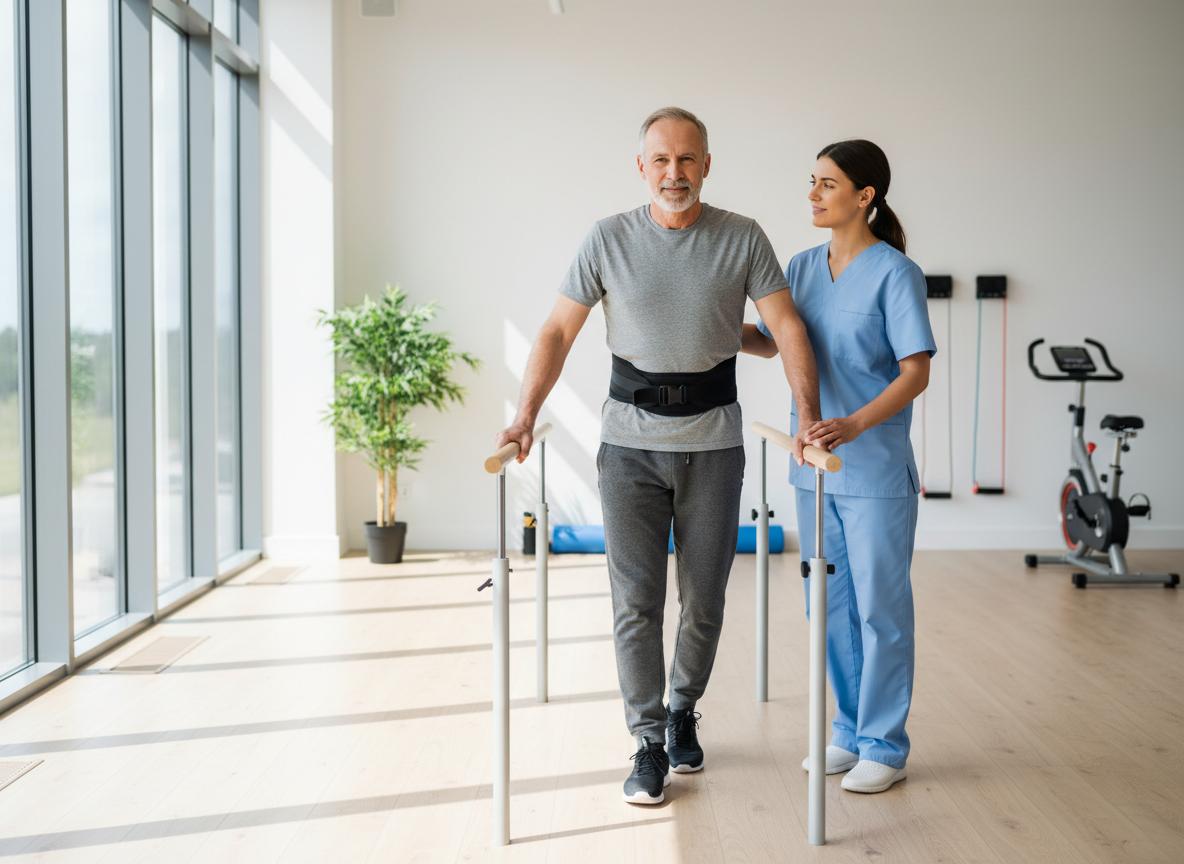
Can Physiotherapy Help After a Stroke? 10 Important Questions Answered
A stroke can affect walking, arm and hand movement, balance, speech and the ability to perform everyday activities. For patients and families, one of the most common questions is: Can physiotherapy help after a stroke?
The answer is yes. Stroke rehabilitation can help many people practise lost skills, improve physical function and work toward greater independence. Recovery varies depending on the severity of the stroke, the areas of the brain affected, overall health and the rehabilitation programme.
At Rays of Hope Physiotherapy, Robotic Rehabilitation & Wellness Center, Rajkot, neurological rehabilitation can be tailored to a person's movement difficulties, functional needs and recovery goals.
Here are 10 important questions about physiotherapy after a stroke.
1. Can Physiotherapy Help After a Stroke?
Yes. Physiotherapy is an important part of rehabilitation for people who experience weakness, balance problems, reduced mobility or difficulty walking after a stroke.
Depending on the person's assessment, rehabilitation may focus on:
Improving sitting and standing control.
Practising transfers between a bed, chair and wheelchair.
Regaining strength and movement control.
Improving balance and walking ability.
Practising everyday functional movements.
Reducing avoidable fall risks.
Helping patients and caregivers learn safe movement techniques.
Physiotherapy cannot reverse brain damage, and results vary. The goal is to help the individual improve function and achieve meaningful activities as far as possible.
2. When Should Physiotherapy Start After a Stroke?
Stroke rehabilitation should begin as soon as the person is medically stable and it is safe to do so, under the guidance of the treating stroke team.
The timing and intensity of rehabilitation depend on the patient's medical condition, fatigue, neurological deficits and ability to participate safely.
Families should not attempt intensive standing or walking exercises independently during the early stage without appropriate clinical guidance.
3. Can a Stroke Patient Walk Again?
Some stroke survivors regain independent walking, while others need a walking aid or assistance. The outcome depends on factors such as initial weakness, balance, coordination, sensation, cognition and overall health.
Walking rehabilitation may include:
Sitting and standing balance.
Sit-to-stand practice.
Weight-shifting exercises.
Stepping and walking practice.
Strength and endurance training.
Gait training with appropriate assistance or devices.
Practice turning and navigating everyday environments.
A physiotherapist can assess the patient's current ability and set realistic, measurable goals.
4. How Can Physiotherapy Help With Paralysis After a Stroke?
A stroke may cause weakness or paralysis on one side of the body. Rehabilitation focuses on practising safe, purposeful movements and improving the use of the affected limbs where possible.
Treatment may include:
Positioning and movement education.
Assisted or active movement exercises.
Repetitive functional task practice.
Strengthening when appropriate.
Trunk control and balance training.
Arm and hand activity practice.
Walking and transfer training, depending on ability.
The programme should be adapted to the individual's muscle control, sensation, pain, fatigue and other medical needs. Avoid forceful pulling on a weak arm, as the shoulder can be vulnerable to injury after a stroke.
5. Can Physiotherapy Improve Hand and Arm Movement After a Stroke?
Physiotherapy and occupational therapy may help patients practise reaching, grasping, releasing and using the affected arm in everyday tasks.
Rehabilitation may involve repetitive task practice, appropriate active movement, strengthening when indicated, and selected interventions based on the patient's examination.
Not every patient will regain the same level of hand function. The rehabilitation team can identify achievable goals and recommend suitable techniques and equipment.
6. How Long Does Stroke Rehabilitation Take?
There is no single recovery timeline for everyone.
Some patients make noticeable progress over the first weeks and months, while others require rehabilitation and support over a longer period. Progress can continue beyond the early recovery phase, although its rate varies.
Recovery depends on factors including:
The type and severity of the stroke.
The location of the affected brain area.
The person's health before the stroke.
Associated problems such as pain, fatigue or cognitive difficulties.
The ability to participate in rehabilitation.
The support available at home.
Regular reassessment helps the rehabilitation team adjust the programme as the person's needs change.
7. What Exercises Are Commonly Used After a Stroke?
Exercises are selected according to the person's functional level and safety needs.
Examples may include:
Supported sitting balance.
Reaching activities in sitting.
Assisted limb movements.
Sit-to-stand practice.
Weight shifting in standing, when safe.
Stepping and walking practice.
Repetitive tasks involving reaching and grasping.
Strength and fitness exercises when medically appropriate.
Patients with severe weakness, poor balance, swallowing difficulties, heart conditions or frequent falls require individual assessment before beginning exercises.
Do not use a generic online exercise list as a substitute for a stroke rehabilitation assessment.
8. Can Robotic Rehabilitation Help After a Stroke?
Technology-assisted rehabilitation may be considered for selected patients when a specific device is appropriate for their functional goals. However, suitability and evidence differ between technologies and treatment targets.
A comprehensive stroke rehabilitation plan may include conventional physiotherapy, task-specific practice, walking training and other interventions chosen according to the patient's needs.
Robotic devices should not be presented as a guaranteed route to recovery or as a replacement for individual assessment. In particular, robot-assisted arm training is not routinely recommended by NICE for upper-limb stroke rehabilitation, and electromechanical gait training has specific evidence and guideline limitations.
At Rays of Hope, patients can enquire about available neurological rehabilitation technologies and whether any are appropriate for their individual needs.
9. What Can Family Members Do to Support Stroke Recovery?
Family members can help by following the rehabilitation team's advice and creating a safe, supportive environment.
Useful steps include:
Keeping walking areas clear and well lit.
Following the prescribed exercise programme.
Learning safe transfer and mobility techniques.
Supporting regular daily routines.
Allowing adequate rest when fatigue is present.
Avoiding pulling on the affected arm.
Reporting new pain, falls or changes in function.
Attending caregiver education sessions when available.
Caregivers should not force exercises or attempt unsupported walking when the patient is at risk of falling.
10. Where Can I Get Stroke Physiotherapy in Rajkot?
Patients and families looking for stroke physiotherapy in Rajkot can contact Rays of Hope Physiotherapy, Robotic Rehabilitation & Wellness Center, to enquire about neurological rehabilitation assessment and available services.
A suitable programme may address walking, balance, weakness, transfers, functional movement and caregiver education. The actual treatment plan should be determined after an individual assessment.
When Is Urgent Medical Attention Needed After a Stroke?
Seek emergency medical attention if a person develops sudden new facial drooping, arm or leg weakness, difficulty speaking, sudden vision loss, a severe sudden headache or another possible sign of a new stroke.
Do not assume that a sudden deterioration is part of the usual recovery process.
Book a Stroke Rehabilitation Consultation in Rajkot
Recovery after a stroke can involve physical, emotional and practical challenges. Individualised rehabilitation can help patients and families work toward realistic functional goals with appropriate clinical support.
Rays of Hope Physiotherapy, Robotic Rehabilitation & Wellness Center, Rajkot
Appointment contact: +91 82001 33691
University Road Branch: Near Khodiyar Dairy, Panchayat Chowk, University Road, Rajkot, Gujarat.
Mota Mava Branch: Opp. Sunshine School, Behind Karan Arjun Party Plot, New Ring Road, Rajkot, Gujarat.
Website: https://www.raysofhope.co.in/
Rays of Hope — Add Quality to Life.
Medical disclaimer: This article is for general educational purposes and does not replace an individual assessment by a qualified healthcare professional. Stroke rehabilitation must be adapted to the patient's medical stability, abilities and goals.